Istanbul Archaeology Museums

Why visit

Who will love it

{ "price_from": "760 TRY", "duration": "3 hours", "best_time": "Morning or late afternoon", "booking_required": true, "district": "Sultanahmet", "recommendation_block": { "priority_audience": "Prioritize this museum if you are a history enthusiast or want to escape the intense crowds of the neighboring Topkapi Palace.

It is a world-class destination for seeing the Alexander Sarcophagus and the Treaty of Kadesh, offering a deep, quiet dive into the ancient civilizations of the Near East and the Mediterranean.", "skip_audience": "You may want to lower its priority if you are traveling with small children or have a low tolerance for repetitive galleries of ancient statuary.

The scale of the collection is massive, and without a specific interest in archaeology, the three-hour commitment can feel like a marathon of stone and pottery rather than a highlight.", "expert_tip": "Visit the Tiled Kiosk within the complex for a vibrant look at Ottoman ceramics that contrasts beautifully with the main archaeological halls.", "final_verdict": "This is a mandatory stop for serious history lovers but can be safely skipped by those on a tight schedule who prefer the city's more visual, architectural landmarks." } }

Who should skip it

Not specified yet

What to know beforehand

{ "summary": "The Istanbul Archaeology Museums is a massive three-building complex located near Topkapi Palace, housing over a million ancient artifacts. Its most significant treasures include the Alexander Sarcophagus and the Treaty of Kadesh, the world's oldest known peace treaty.

This site is ideal for those seeking a deep dive into Middle Eastern and classical history while avoiding the dense crowds typical of nearby landmarks. A thorough exploration of all sections, including the Tile Pavilion and the Museum of the Ancient Orient, requires approximately three hours.

For those who are not enthusiasts of ancient sculpture, the sheer scale of the collection may feel overwhelming.", "body": [ "The Essence: A quiet complex adjacent to Topkapi Palace featuring the Alexander Sarcophagus, the Kadesh peace treaty, and over a million historical artifacts.", "Main Nuance: The vast scale of the exhibition and the high volume of ancient statues can lead to fatigue for visitors who are not dedicated history enthusiasts.", "Time Required: Allocate three hours for a comprehensive visit to all halls, including the Tile Pavilion and the Museum of the Ancient Orient.", "Ticket Price: Entry for foreign tourists is 15 EUR (approximately 540 TRY).", "How to Get There: Pre-booking is required; the most efficient route is taking the T1 tram line to the Gülhane station.", "Opening Hours: The museum is open daily from 09:00 to 17:30 during the winter season and until 19:00 during the summer season." ], "ticket_block": "### Which Ticket to Choose\n\nA standard entry ticket provides access to all three buildings in the complex: the Main Building, the Tile Pavilion, and the Museum of the Ancient Orient.

Because pre-booking is required for entry, the base ticket must be secured online in advance.

There are no specialized VIP tiers; the standard ticket covers the entire permanent collection.\n\n- Base Ticket: Guaranteed access to all permanent exhibitions within the complex.\n- Audio Guide Ticket: Includes access to a mobile application or a multimedia device for a self-guided tour of the artifacts.\n\nA common mistake for visitors is arriving without a pre-purchased ticket or assuming that entry is included with a Topkapi Palace ticket.

These are separate museum complexes with independent entrances and ticketing systems.", "timing_block": "### Best Time to Visit\n\nThe Archaeology Museums are generally less crowded than neighboring attractions, but arriving at the 09:00 opening is recommended to beat the heat and maintain focus.

The scale of the collection is demanding; a thoughtful tour takes about three hours, and mental fatigue often sets in by midday.

Furthermore, tour groups frequently arrive in the afternoon after completing their morning visits to Topkapi Palace.\n\nMorning hours are ideal for photographers and solo travelers who wish to examine the Alexander Sarcophagus and classical sculptures in relative silence.

Families should consider breaking the visit into two parts with a rest in the shaded courtyard, which is home to local cats and peacocks.

The museum operates until 17:30 in winter and 19:00 in summer; the T1 tram to Gülhane is the most direct transport option.", "editorial_note": "The complex offers a rare sense of tranquility in Sultanahmet, serving as a sanctuary from the city's more chaotic landmarks.

However, the sheer volume of stone artifacts can lead to museum fatigue; prioritize the Alexander Sarcophagus and the Museum of the Ancient Orient early in your visit.

History buffs will find it rewarding, but casual visitors might find the endless halls of Hellenistic sculpture repetitive.\n\nEditor's Tip: Do not skip the Tile Pavilion (Çinili Köşk).

It houses stunning Ottoman ceramics and provides a colorful, smaller-scale contrast to the massive stone collections in the other buildings." }

Archaeological courtyard with stone head, columns, hedges, and trees

🎫 Tickets, tours & discounts

[ { "attraction": "Istanbul Archaeology Museums", "city": "Istanbul", "price_from": "760 TRY", "booking_required": true, "best_time": "09:00 or two hours before closing", "opening_hours": "09:00–19:00 (Summer), 09:00–17:30 (Winter)", "nearest_metro": "Gülhane (T1 Tram)", "duration": "3 hours", "currency": "TRY", "editorial": "### Which ticket to choose\n\nThe standard entrance ticket costs 760 TRY and provides access to all three main sections: the Archaeology Museum, the Museum of the Ancient Orient, and the Tiled Kiosk.

For most visitors, this basic ticket is the best option because the museum is rarely as crowded as the neighboring Topkapi Palace, making premium fast-track options unnecessary.\n\nA common mistake for first-time travelers is buying individual tickets for each site in the Sultanahmet area.

If you plan to visit more than three state-run museums, including the Topkapi Palace or the Galata Tower, the MuseumPass Istanbul is a much smarter investment.

It includes the Archaeology Museums and allows you to skip the ticket booth entirely.\n\n### Best time to visit\n\nTo experience the galleries in near-total silence, arrive exactly at 09:00.

The museum is a massive complex, and starting early allows you to explore the Museum of the Ancient Orient and the Tiled Kiosk before the midday heat.

Photographers will find the morning light best for capturing the intricate blue tiles of the kiosk facade.\n\nFor a more relaxed pace, the two hours before closing are excellent.

While the crowds at nearby landmarks remain thick until sunset, the Archaeology Museums usually empty out, leaving the Hellenistic statues and the Alexander Sarcophagus almost entirely to you.

Families should stick to the morning slots when energy levels are high, as the three-hour walking route can be tiring for children.\n\n### Combos and discounts\n\nThe primary way to save is through the MuseumPass Istanbul or the broader MuseumPass Turkey.

These passes are valid for five to fifteen days and significantly lower the per-site cost if you are visiting multiple landmarks.

There are no specific 'combo' tickets sold at the gate that pair the museum with private attractions like the Basilica Cistern.\n\nChildren under the age of 12 enter for free, but you must present a physical passport at the ticket window to secure the complimentary entry.

Residents with a Turkish ID can use the Müzekart, but this is not available to those on tourist visas.

There are no specific discounts for seniors or students of foreign universities at this time.\n\n### When to take a tour\n\nA guided tour is worth the investment if you want to connect the dots between the various civilizations on display, such as the Hittites, Babylonians, and Romans.

A professional can quickly lead you to the 'heavy hitters' like the Kadesh Treaty—the world's oldest peace treaty—and explain the complex symbolism of the sarcophagi that you might otherwise miss.\n\nIf you prefer to absorb history at your own speed or are specifically interested in the aesthetics of the statues, a self-guided visit is perfectly fine.

The signage in English is comprehensive, and the chronological layout of the main building is easy to navigate without assistance. Take a tour for the stories; go solo for the atmosphere.\n\nTip: Start your visit with the Museum of the Ancient Orient.

It is smaller and contains the Kadesh Treaty, making it a great 'appetizer' before tackling the massive main archaeology building." } ]

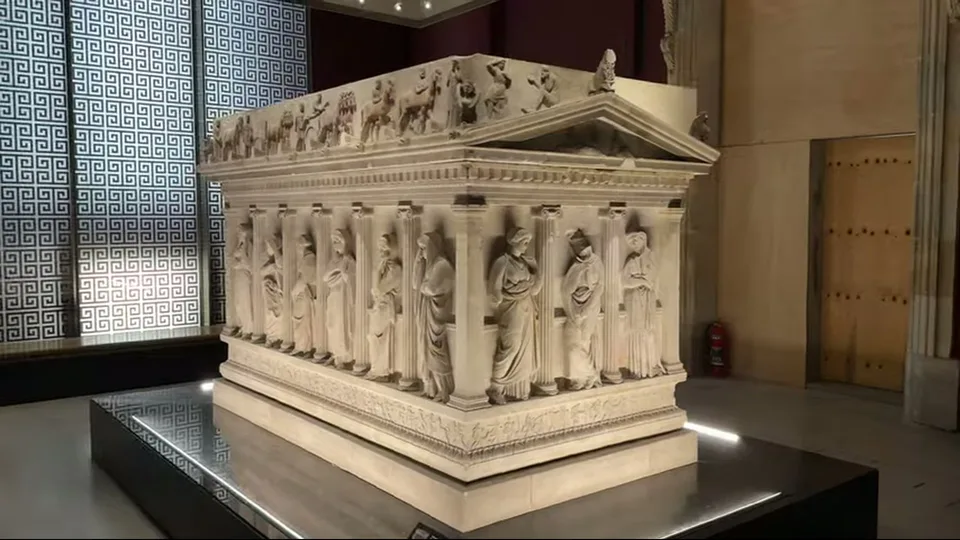
Large carved marble sarcophagus displayed in a bright museum hall
Weather now
Istanbul, Republic of Türkiye
NowClear night 🌙
Temperature20°C
VisibilityExcellent
AerosolsClean air · AOD 0.13

Good conditions for visiting today.

AOD — how much dust and haze in the air dim the distant view. 0 clean, >0.4 noticeable, >0.7 heavy.

Crowd indicator

Mini-calculator based on crowd levels by day and time.

When to go?

Mini-calculator based on crowd levels by day and time.

Best time at Mon — 18:00

This day is usually calmer than average. This slot has a higher chance of a comfortable visit: compromise between light and visitor flow.
30–50% · Quiet60–80% · Moderate90–100% · Crowded

Nearest days

Today
10:0035%
12:0070%
14:0085%
16:0055%
17:0035%
18:0020%
Tomorrow
10:0035%
12:0070%
14:0080%
16:0050%
17:0030%
18:0015%
Day after tomorrow
10:0025%
12:0050%
14:0060%
16:0040%
17:0020%
18:0010%
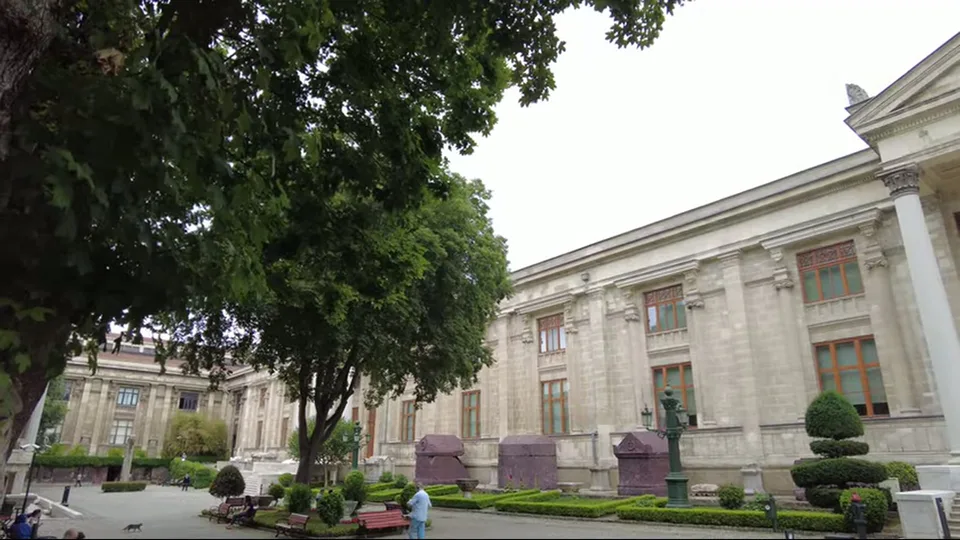
Wide courtyard and facade of Istanbul Archaeology Museums

How to find the entrance

1
"Gülhane Tram StationTake the T1 line to the Gülhane stop and enter the park gates.",
2
"Uphill WalkFollow the main road toward Topkapi Palace and find the museum entrance on the right.",
3
"Security CheckpointPass through the mandatory bag inspection and present your pre-booked ticket at the turnstiles.",
4
"Museum PavilionsAccess the three distinct buildings and the open courtyard using your single entry pass."

{ "attraction": "Istanbul Archaeology Museums", "address": "Osman Hamdi Bey Yokusu, Sultanahmet, Fatih", "nearest_transit": "Gülhane Station (Tram Line T1)", "district": "Sultanahmet", "entrance_instructions": "The museum complex is situated on the Osman Hamdi Bey slope, just inside the outer walls of Topkapi Palace.

To get here, take the T1 tram line to the Gülhane stop. From the station, walk uphill through the park entrance; the museum gates will be on your left before you reach the palace's main courtyard.

This entrance is significantly less chaotic than the main palace gates, offering a quieter start to your visit.\n\nAfter passing through the mandatory security screening, you will enter a courtyard that connects three distinct buildings.

Most visitors lose time by not realizing the scale of the site; the collection spans the main Archaeology Museum, the Museum of the Ancient Orient, and the Tiled Kiosk.

It is best to prioritize the main building first to see the Alexander Sarcophagus before your energy flags.\n\n- Security bag checks are mandatory at the main entrance gate.\n- The approach involves walking on uneven cobblestones and a slight incline.\n- Transitioning between the three separate museum buildings requires multiple entries and exits into the courtyard.\n\nImportant: Entry for foreign tourists requires a pre-booked ticket.

Make sure to have your digital or printed booking confirmation ready before reaching the turnstiles.", "admission_fee": "760 TRY", "opening_hours": "Daily from 09:00 to 19:00 in the summer season and until 17:30 in the winter season" }

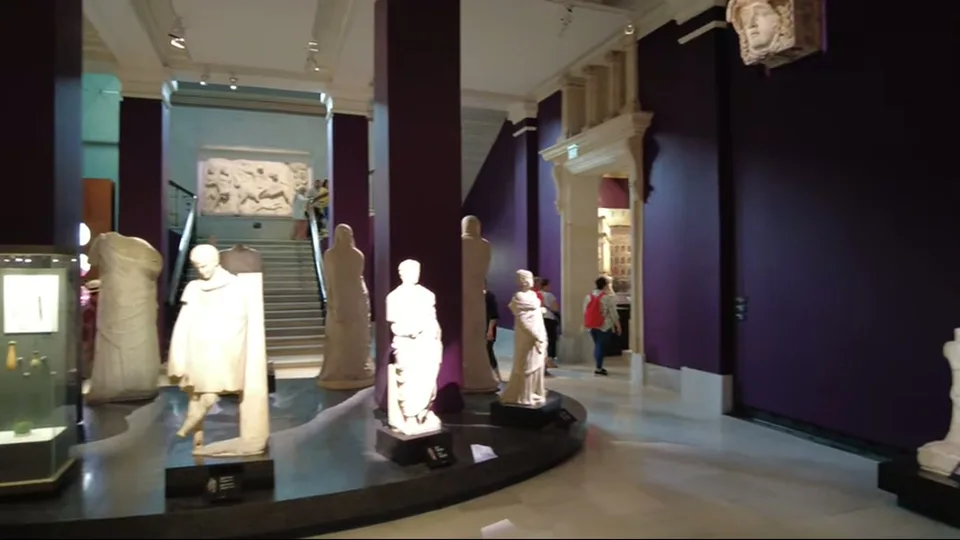
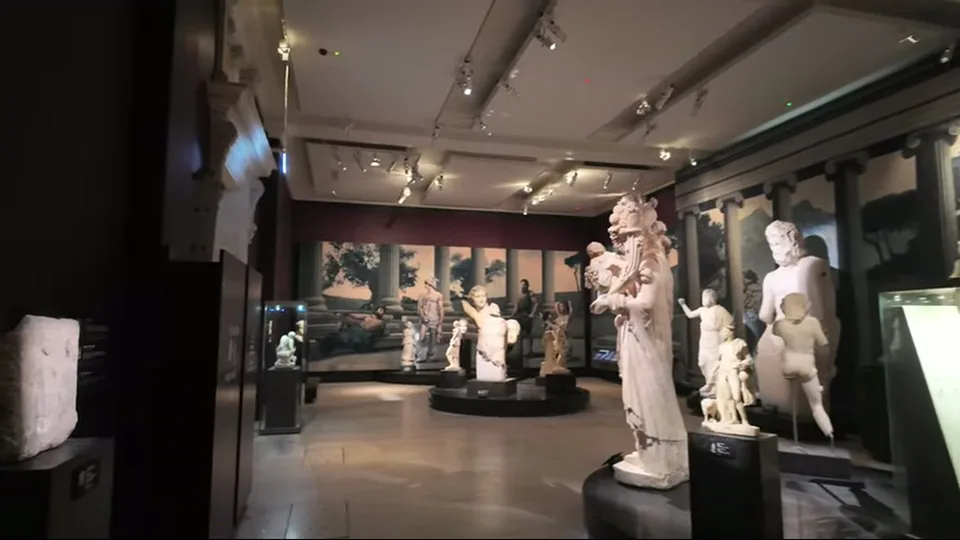
Wide view of statue-filled gallery inside Istanbul Archaeology Museums

Practical limits & what to bring

{ "attraction": "Istanbul Archaeology Museums", "city": "Istanbul", "country": "Turkey", "currency": "TRY", "practical_notes": "### What to consider before visit\n\nThe museum is a massive complex consisting of three distinct buildings: the main Archaeology Museum, the Museum of the Ancient Orient, and the Tiled Kiosk.

Expect to spend at least three hours here to properly see key pieces like the Alexander Sarcophagus and the Treaty of Kadesh.

Since you must cross an open courtyard to move between the pavilions, dress according to the weather to stay comfortable during the transitions.\n\nWhile this site is generally less crowded than the neighboring Topkapi Palace, a mandatory security screening at the entrance is required for all visitors and can take about 10 minutes.

The experience involves significant walking and standing among stone artifacts, which may feel repetitive if you are not a dedicated history enthusiast.

Advance booking is mandatory to enter for 760 TRY; ensure your ticket is ready before reaching the turnstiles to avoid delays.\n\n### What is allowed and what is forbidden\n\n- No professional photography equipment, including tripods and selfie sticks.\n- No food or open beverages are permitted inside the galleries.\n- Flash photography is prohibited to protect the ancient pigments and stone surfaces.\n- Large suitcases and bulky items are not allowed in the exhibition halls.\n- Small personal bags and bottled water are permitted.\n\n### Storage and belongings\n\nA cloakroom is available near the entrance for storing items that are too large for the galleries.

If you are traveling with large luggage, you must leave it in the storage area as it will not be allowed past the ticket gates.

Strollers are permitted in most areas, but be prepared for occasional steps and narrow passages in the older sections of the complex, such as the Tiled Kiosk.\n\nTip: Use the T1 tram line to the Gülhane stop or the Marmaray to Sirkeci for the most direct access, then walk through the Gülhane Park gates and follow the uphill path to the right of the main road leading to the palace complex." }

Grand interior hall with staircase and statues in Istanbul Archaeology Museums

Location and what's nearby

[ { "### About the District": [ "- Sultanahmet is the historical heart of Istanbul, where Byzantine and Ottoman layers are physically visible at every corner.", "- The area is densely packed with world-class landmarks, making it the primary destination for a first-time cultural visit.", "- While the main squares are often crowded and bustling, the museum grounds provide a rare, quiet sanctuary of shaded gardens.", "- The district is almost entirely pedestrian-oriented, best suited for a day of slow walking and architectural photography." ], "### Nearby on Foot (up to 15 minutes)": [ "- Topkapi Palace — Former imperial residence of Ottoman Sultans featuring the Harem and Treasury · 3 minutes", "- Gulhane Park — Expansive former royal gardens ideal for a shaded walk under ancient plane trees · 2 minutes", "- Hagia Sophia — Iconic Byzantine cathedral turned mosque famous for its massive dome and mosaics · 8 minutes", "- Basilica Cistern — Atmospheric subterranean reservoir with Medusa-head pillars and soft lighting · 10 minutes", "- Blue Mosque — Landmark 17th-century mosque known for its six minarets and blue Iznik tiles · 12 minutes", "- Hagia Irene — One of the oldest Byzantine churches in the city, located in the palace outer courtyard · 5 minutes" ], "### 15–30 Minutes by Transport": [ "- Grand Bazaar — One of the world's largest covered markets for carpets, gold, and leather · 15 minutes by tram", "- Galata Tower — Genoese stone tower offering 360-degree views of the Golden Horn and Bosphorus · 20 minutes by tram", "- Suleymaniye Mosque — Grand imperial mosque complex designed by Mimar Sinan with a view over the city · 25 minutes by tram" ], "### Where to Eat Nearby": [ "- Matbah Restaurant — Traditional Ottoman palace cuisine based on historical 15th-century recipes · above average · booking recommended · 8 min walk", "- Tarihi Sultanahmet Koftecisi Selim Usta — Iconic local spot serving grilled meatballs since 1920 · mid-range · no booking needed · 10 min walk", "- Balikci Sabahattin — Family-run seafood landmark housed in a restored Ottoman wooden mansion · high · booking recommended · 12 min walk", "- Karakoy Lokantasi — Famous modern meyhane across the bridge serving refined mezes and fish · above average · booking recommended · 15 min by taxi" ], "### Ready-made Day Itinerary": "Start your morning at the Istanbul Archaeology Museums to explore the Sarcophagus of Alexander in relative peace before the midday crowds arrive.

Afterward, walk through the greenery of Gulhane Park to Matbah Restaurant for a lunch of authentic Ottoman dishes.

Spend your afternoon at the Topkapi Palace complex, and conclude the day by watching the sunset between the minarets of Hagia Sophia and the Blue Mosque.\n\nNote: Visit the museum first in your itinerary, as it requires significant focus and walking through three separate buildings, which is best done while your energy levels are high." } ]

Framed stone relief panel with rider, figures, and serpent carving
Reference

Facts

Read more

{ "attraction": "Istanbul Archaeology Museums", "city": "Istanbul", "country": "Turkey", "facts_block": "### Numbers and Scale\n- Collection size: 1,000,000 artifacts representing almost all civilizations within the Ottoman Empire's former borders.\n- Opening: June 13, 1891, as the first building in the Ottoman Empire designed specifically to serve as a museum.\n- Buildings: 3 separate structures including the main Archaeology Museum, the Museum of the Ancient Orient, and the Tiled Kiosk.\n- Historical range: Exhibits cover a timeline of 5,000 years, from the earliest Sumerian scripts to the end of the Ottoman era.\n- Architect: Alexander Vallaury designed the main building, blending Neo-Classical and Orientalist styles for the Ottoman imperial collection.\n- Artifact weight: 15 tons of Pentelic marble were used to carve the Alexander Sarcophagus, which was transported from Greece to Lebanon.\n\n### Myths and Misconceptions\n- Myth: The Alexander Sarcophagus contains the actual remains of Alexander the Great.

In reality: It was the tomb of King Abdalonymus of Sidon, named for its decorative reliefs of Alexander.\n- Myth: The entire museum complex is a 19th-century Neo-Classical construction.

In reality: The Tiled Kiosk was built in 1472 by Mehmed the Conqueror, making it much older than the main museum.\n- Myth: The museum is just a smaller version of the Topkapi Palace collections.

In reality: It is a separate institution focused on archaeology, not royal lifestyle or treasury items.\n\n### Rare and Unusual\n- Peace Treaty: The Kadesh Treaty is a small clay tablet on display representing the world's oldest known peace treaty, signed in 1258 BC.\n- Defense Chain: Massive iron links from the Golden Horn chain used to block the harbor during the 1453 siege are preserved in the collection.\n- Babylonian Art: The Museum of the Ancient Orient features original blue-glazed bricks from the processional way of the Ishtar Gate.\n- Hebrew Script: The Siloam Inscription is a rare 8th-century BC artifact and one of the oldest surviving examples of the Hebrew language in writing.\n- Sarcophagus Weight: The Sidamara Sarcophagus weighs 32 tons, making it one of the heaviest and most intricately carved Roman-era tombs discovered." }

Background

History

Read more

{ "attraction": "Istanbul Archaeology Museums", "history": "### A Legacy of Preservation\n\nEstablished in the late Ottoman era, this complex was the empire's first modern museum, designed to house a massive collection of treasures from across three continents.

It was founded to protect regional heritage from being exported abroad, marking a turning point in how the state preserved its ancient past.\n\nThe museum consists of three distinct buildings.

The Tiled Pavilion is the oldest structure, showcasing early Ottoman ceramic work, while the main Neo-Classical building houses the legendary Alexander Sarcophagus and the Treaty of Kadesh, the world's oldest known peace treaty.\n\nToday, the site offers a quieter, more academic alternative to the crowded halls of the neighboring Topkapi Palace.

With over a million artifacts ranging from pre-Islamic Arabian art to Roman statuary, it serves as a comprehensive visual timeline of the civilizations that shaped the Mediterranean and the Middle East.", "practical_details": { "essence": "A massive complex near Topkapi Palace housing the Alexander Sarcophagus, the oldest peace treaty, and a million artifacts without the heavy crowds.", "key_nuance": "The sheer scale and the abundance of ancient statues can be exhausting for those not deeply interested in ancient history.", "time_required": "Allow three hours for a thorough visit to all halls, including the Tiled Pavilion and the Museum of the Ancient Orient.", "ticket_price": "15 EUR (760 TRY)", "how_to_get_there": "Take the T1 tram line to the Gülhane stop; advance booking is required.", "opening_hours": "Open daily from 09:00 to 17:30 in the winter and until 19:00 in the summer." } }

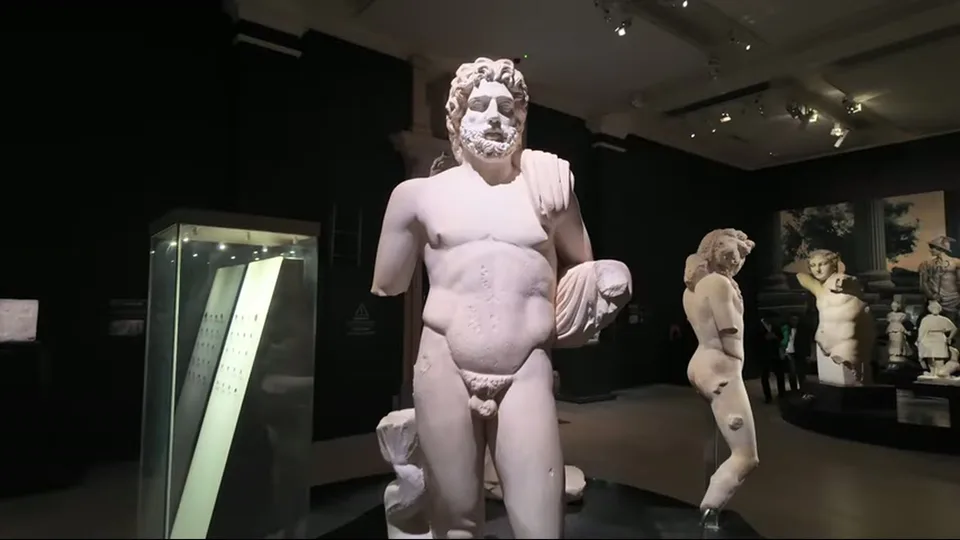
Large marble male statue displayed in the museum sculpture hall

♿ Accessibility & families

[ { "short_accessibility_flag": "Wheelchair accessible with elevators and ramps; some uneven courtyard stones.", "child_friendly": "Free entry for children under 12; strollers permitted throughout.", "accessibility_and_family_policy": "## Accessibility and Family Policy\n\nThe Istanbul Archaeology Museums complex is accessible for wheelchair users and visitors with reduced mobility.

The main Archaeology Museum building is equipped with modern elevators and ramps reaching all floors.

The Museum of the Ancient Orient and the Tiled Kiosk are ground-level structures, making them accessible, though the historic stone paving in the outdoor courtyard can be uneven for manual wheelchairs.\n\nStrollers are permitted inside all museum buildings.

Elevators provide easy access to the upper levels of the main building, making it convenient for families with young children to explore the extensive sarcophagi collections.

The museum gardens offer a peaceful environment with plenty of space for a break away from the city crowds.\n\nAdmission is free for children under 12 years of age. A valid passport or official ID must be presented at the ticket counter to verify the child's age and obtain a free ticket. Adult tickets are 525 TRY.

All visitors under the age of 16 must be accompanied by an adult. While the main halls are spacious, some side galleries in the Museum of the Ancient Orient have narrower passages, though they remain manageable for standard-sized strollers." } ]

🏢 On-site amenities

[ { "amenities": { "restrooms": "Clean restrooms are located on the ground floors of the main Archaeology Museum building and the Museum of the Ancient Orient. These facilities are free for all ticket holders.", "dining": "A casual outdoor cafe is situated in the garden courtyard between the museum buildings.

It offers a quiet atmosphere for Turkish coffee, tea, and light snacks among ancient stone artifacts.", "shopping": "A museum gift shop is located near the main entrance.

It stocks high-quality replicas of famous artifacts, academic books on Ottoman and Byzantine history, and various themed souvenirs.", "connectivity_and_water": "Public Wi-Fi is not available within the museum pavilions.

There are no public water fountains on-site, but bottled water is available for purchase at the garden cafe.", "family_and_prayer_rooms": "Basic nursing facilities are available in the main building.

While the museum does not have a dedicated prayer room, several major mosques are located within a short walking distance in the Sultanahmet district." } } ]

Reliability & freshness

UpdatedMay 23, 2026

I live in Istanbul and, after seven years here, I write clear guides on getting around Türkiye day to day.