Grand Bazaar

Grand Bazaar

Why visit

Who will love it

[ { "price_from": "420 TRY", "duration": "2 to 3 hours", "best_time": "Morning", "booking_required": "Yes", "district": "Beyazit", "priority_recommendation": "First-time visitors seeking the quintessential 'Old Istanbul' atmosphere should prioritize the Grand Bazaar.

It is the premier choice for those who want to browse a vast selection of high-quality ceramics, Turkish textiles, and artisanal jewelry in a historic setting, offering a level of architectural charm that modern shopping malls cannot replicate.", "skip_recommendation": "If you are looking for a quiet shopping environment or the lowest possible local prices, you may find the bazaar overwhelming and expensive.

It is a destination for those who value the sensory experience and the cultural ritual of bargaining over a quick or budget-oriented transaction, so those on a strict schedule or budget may prefer smaller local markets.", "expert_tip": "Note: Access to specific guided experiences starts at 420 TRY and requires advance booking." } ]

Who should skip it

Not specified yet

What to know beforehand

[ { "experience_notes": "The Grand Bazaar is a test of sensory endurance. While the main thoroughfares are dazzling, the real character lies in the side 'hans' (courtyards) where artisans still work.

If you find the main corridors overwhelming, step into a side alley to find a quieter tea spot and watch the local trade rhythm.\n\nMost visitors enjoy the bazaar as a living museum rather than a bargain destination.

If you are looking for the lowest prices in Istanbul, you are better off in the backstreets of Eminonu or across the water in Kadikoy, as the convenience of the bazaar comes with a built-in tourist markup.\n\nPractical Tip: Getting lost is part of the intended experience, so leave enough time to wander without a strict schedule.", "summary": "The Grand Bazaar is more than just a market; it is an entire covered quarter of old Istanbul where people go for the city's essence: narrow passages, shop windows with ceramics, textiles, sweets, and jewelry, the noise of trade, and the chance to choose a gift rather than just buy an item.

It is best suited for those who are in Istanbul for the first time and want to combine a walk with shopping.

It is worth noting that it is crowded, and prices are often higher than in regular city districts.", "body": "- Essence — The Grand Bazaar is a covered quarter of old Istanbul, visited for the city's atmosphere, walking, and gift selection.\n- Who should go — The best option for a first trip to Istanbul if you want to combine a walk with shopping in one place.\n- Assortment — Come here for ceramics, textiles, sweets, jewelry, and souvenirs, not for quick everyday shopping.\n- Prices — Goods here are often more expensive than in regular city districts; people come for the variety and the experience, not for savings.\n- Main drawback — It is crowded; if you do not like dense crowds, the place quickly becomes exhausting.\n- Access — Mandatory booking is indicated for visiting; this is the main organizational point before the visit.", "ticket_block": "### Which ticket to choose\n\nThe Grand Bazaar does not have an entrance ticket: you do not pay for entry itself.

Therefore, the basic option for most is to come independently and save your budget for purchases.

If you see paid options in a booking system, these are not \"tickets to the bazaar,\" but rather excursions, private accompaniment, or shopping routes with a guide.\n\nIt makes sense to pay more not for a \"VIP entry,\" but for a person who will lead you through the market without chaotic wandering and explain where to look for ceramics, textiles, sweets, and jewelry.

For a short walk of 1–2 hours and a few souvenirs, an independent visit is sufficient; for a first trip to Istanbul, an interest in the market's history, or expensive purchases, it is wiser to take a mini-group tour or an individual format.\n\n- Independent visit — the best choice if you just want to walk around, look at the windows, and buy small souvenirs.\n- Group tour — convenient for a first introduction to the bazaar and its logic.\n- Individual guide — justified if you want to buy carpets, jewelry, antiques, or get through the market quickly and efficiently.\n- Fast-track and separate \"premium entry\" do not provide a noticeable advantage here: the market does not operate like a museum with a ticket queue.\n\nImportant: a common mistake for beginners is to overpay for a \"special ticket\" where entry is actually free.

Here, you choose the format of accompaniment, not a ticket.", "best_time": "The Grand Bazaar is open from Monday to Saturday from 09:00 to 19:00 and is closed on Sundays.

The most comfortable time is the first hours after opening: the passages are clearer, it is easier to look at the displays, and simpler to navigate the labyrinth of streets without a constant oncoming flow.\n\nThe heaviest traffic is in the middle of the day when tour groups and independent visitors arrive simultaneously.

Closer to closing, the number of people may decrease slightly, but there is little time left for a calm selection of goods.

For photography, the market is also better in the morning: fewer people in the frame and easier to capture the arches, vaults, and long rows of shops.\n\nA calm recommendation is this: a solo traveler or photographer should come at opening; a family with children — in the first half of the day before it gets too crowded inside; if the atmosphere and noise of a large Eastern market are what matters most to you, the middle of the day is also fine, but it is the most tiring scenario.", "combo_block": "### Combos and discounts\n\nThere are almost no full \"combo tickets\" specifically for the Grand Bazaar because entry is free.

In practice, you will find sightseeing routes through the Old City where the Grand Bazaar is linked with the Blue Mosque, Hagia Sophia, Topkapi Palace, the Spice Bazaar, and a walk through Sultanahmet.

This is convenient if you want to visit several points in one day and not waste time on logistics.\n\nCity tourist passes may also include the Grand Bazaar, but not as a separate paid object, rather as an audio guide or a short guided tour.

Choosing such a pass for the bazaar alone is not profitable; it only makes sense if you are already planning to visit several paid museums and palaces.

There are no child, resident, or off-peak discounts for entry itself because entry is free.\n\nTip: if the goal is to save money, do not look for an entry discount; it simply does not exist here.

Saving at the Grand Bazaar is not about the ticket, but about a sensible choice of purchases: come for the atmosphere, variety, and experience, not for the lowest prices in the city.", "tour_logic": "### When it makes sense to take a tour\n\nA tour is truly useful if you want to understand how the market is organized, rather than just walking through the main passages.

A good guide saves time: they show the historical parts of the bazaar, explain the difference between tourist rows and more specialized shops, help you not get lost in the transitions, and provide context without which the market easily reduces to \"many identical shops.\"\n\nYou can easily do without a tour if you need a free rhythm: stop for an hour, drink tea, look at ceramics, buy sweets or textiles, and move on.

For a regular walk through the market, an independent visit is enough; a tour is needed not for access, but for meaning, structure, and a more confident choice, especially if you intend to buy something expensive.", "prime_timing": "Arrive exactly at 09:00 to see the bazaar wake up; you will have about an hour of relative calm before the main crowds arrive and the narrow corridors become difficult to navigate.

Avoid Saturday afternoons if you are sensitive to large crowds." } ]

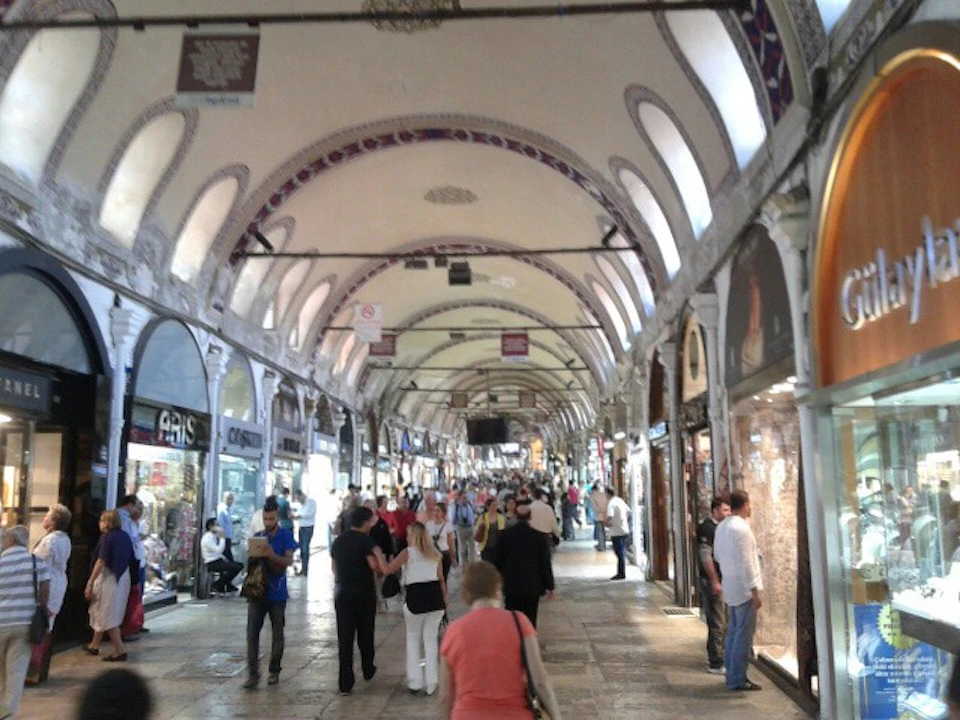
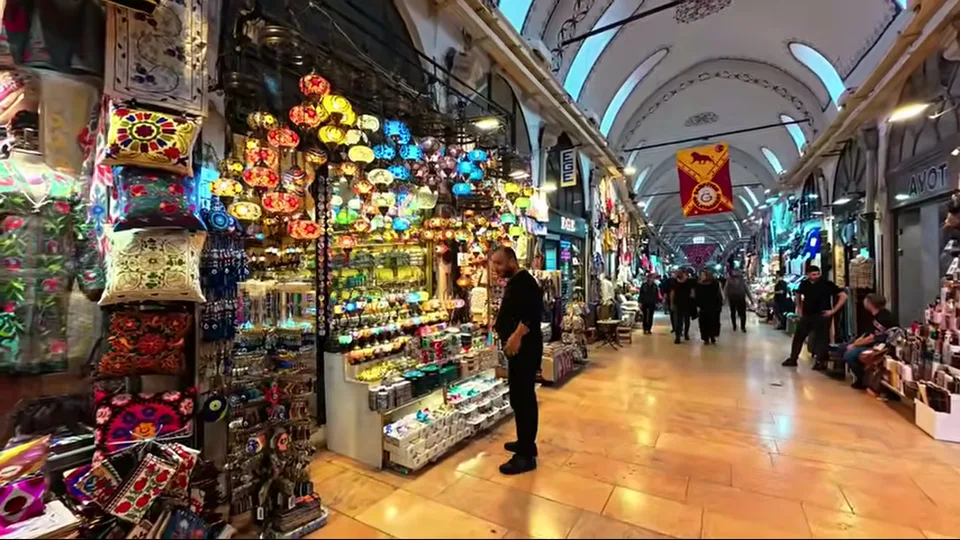
Historic Grand Bazaar entrance arch with shoppers and bag stalls in Istanbul

🎫 Tickets, tours & discounts

[ { "### Which ticket to choose": "While the Grand Bazaar is a public space with multiple free entrance gates, the 'booking required' status typically refers to organized guided tours or specialized access to the rooftops.

A standard self-guided visit costs nothing, but first-time visitors often make the mistake of wandering only the main gold and carpet streets, missing the historic 'hans' (hidden courtyards) where the real craftsmanship happens.

If you are looking for a deeper experience, a guided tour starting around 450 TRY is the practical choice.\n\n- Self-guided walk: Best for casual window shopping and soaking in the atmosphere at no cost.\n- Guided History Tour: Recommended for those who want to find hidden workshops and learn about the 15th-century architecture.\n- Rooftop Access: A premium add-on for photographers looking for the iconic views seen in action films; this always requires a private guide and a separate fee.", "### When to visit": "The bazaar operates from 09:00 to 19:00 and is closed on Sundays and bank holidays.

To avoid the most intense crowds, arrive exactly at 09:00. This 'calm' window lasts until about 11:00, allowing you to speak with shopkeepers before the heavy tourist flow begins.

If you are a photographer, the late afternoon light filtering through the high windows creates a dramatic atmosphere, though navigating the narrow lanes becomes significantly harder as the crowds peak.\n\nFor families, the morning slot is non-negotiable.

By 14:00, the main arteries like Kalpakçılar Street become extremely packed, which can be overwhelming for children or those who dislike tight spaces.

Solo travelers looking for the best deals should also aim for the morning when sellers are eager to make their 'siftah' (the first sale of the day).", "### Combos and discounts": "The Grand Bazaar is frequently included as a key stop in the Istanbul E-Pass and the Istanbul Welcome Card.

While the bazaar itself has no entry fee, these passes provide a professional guide who helps navigate the labyrinth and, more importantly, assists with the etiquette of haggling.

Using a city pass is the most efficient way to combine a bazaar visit with the nearby Blue Mosque or Hagia Sophia, as they are within walking distance via the T1 Tram line.\n\nThere are no specific 'resident discounts' for the bazaar since entry is free, but many shops offer better pricing if you pay in cash (TRY) rather than credit cards.

If you are planning to visit the Spice Bazaar (Mısır Çarşısı) as well, look for 'Old City' walking combos that cover both markets in a single afternoon to save on individual tour bookings.", "### Is a guided tour worth it?": "A guide is not necessary if your only goal is to buy a souvenir or a box of Turkish delight.

The layout is a grid, and you will eventually find an exit. However, a guide adds immense value if you are interested in the 'hidden' bazaar. They can lead you to the Zincirli Han or the ancient silver workshops that are nearly impossible for a tourist to find alone.

\n\nSkip the tour if you prefer to get lost and enjoy the chaos at your own pace.

Choose a tour if you want to understand the history of the guilds, find high-quality leather or jewelry without the high-pressure sales tactics of the main thoroughfares, and learn the subtle art of Turkish bargaining.\n\nTip: The nearest transport hub is the Beyazıt-Kapalıçarşı station on the T1 Tram line.

Use this instead of taxis, which often struggle to navigate the congested streets of the Fatih district." } ]

View tickets

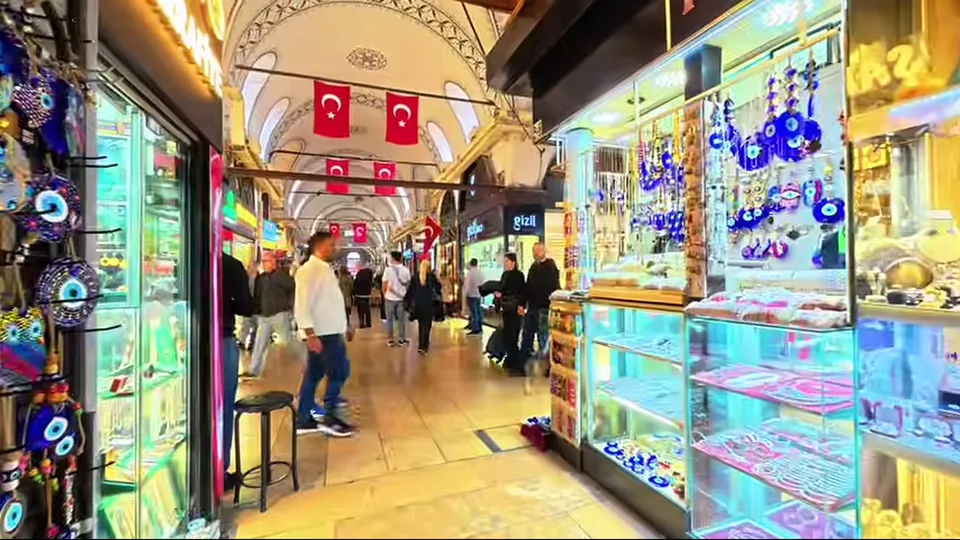
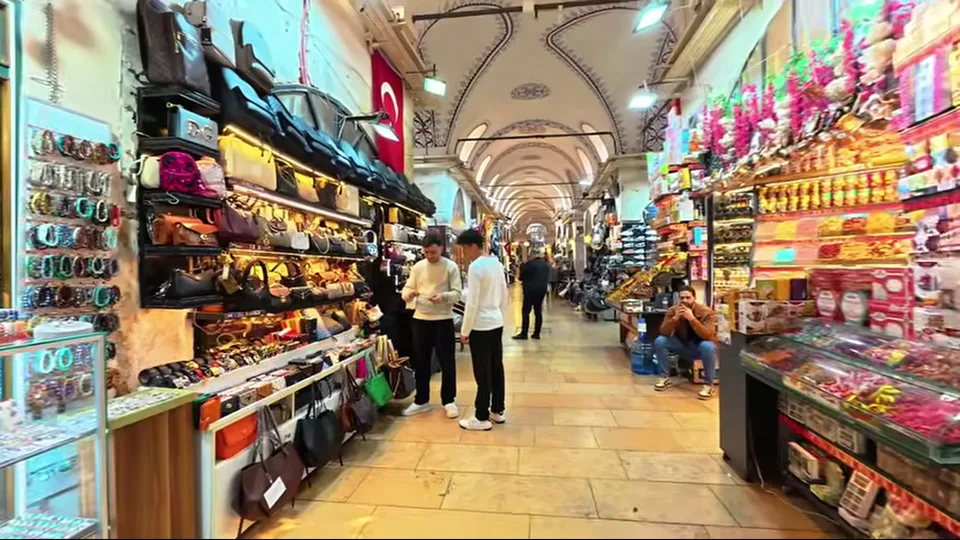
Grand Bazaar corridor with Turkish flags, jewelry cases, and evil-eye ornaments
Weather now
Istanbul, Republic of Türkiye
NowPartly cloudy 🌤️
Temperature20°C
VisibilityExcellent
AerosolsClean air · AOD 0.12

Good conditions for visiting today.

AOD — how much dust and haze in the air dim the distant view. 0 clean, >0.4 noticeable, >0.7 heavy.

Crowd indicator

Mini-calculator based on crowd levels by day and time.

When to go?

Mini-calculator based on crowd levels by day and time.

Best time at Mon — 10:00

This day is usually noticeably busy. This slot has a higher chance of a comfortable visit: fewer people and calmer pace.

30–50% · Quiet60–80% · Moderate90–100% · Crowded

Nearest days

Today
10:0045%
12:0085%
14:00100%
16:0095%
17:0090%
18:0070%
Tomorrow
10:000%
12:000%
14:000%
16:000%
17:000%
18:000%
Day after tomorrow
10:0040%
12:0075%
14:0095%
16:0085%
17:0080%
18:0060%
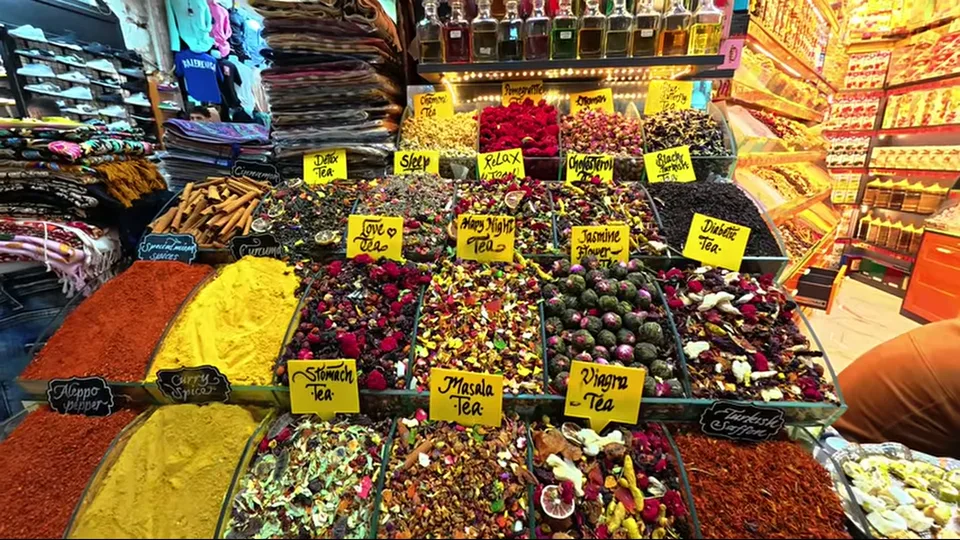
Symmetrical spice and tea stall overflowing with color in Grand Bazaar

How to find the entrance

1
"Reach Beyazıt SquareTake the T1 tram to the Beyazıt-Kapalıçarşı stop for the most direct access.",
2
"Find the historic gatesHead toward the arched stone entrances near the square to avoid side-street confusion.",
3
"Prepare booking confirmationHave your reservation slot ready on your phone before reaching the security checkpoint.",
4
"Pass through securityComplete a quick bag scan at the gate to enter the covered market area."

{ "attraction": "Grand Bazaar", "address": "Beyazit, Kalpakcilar Cd. No:22, 34126 Fatih/Istanbul", "nearest_transit": "Beyazit-Kapalicarsi Station (T1 Tram)", "district": "Beyazit", "entrance_instructions": "The Grand Bazaar is a vast covered district in the historic center.

The most reliable way to reach it is by taking the T1 Tram to the Beyazit-Kapalicarsi station.

From there, follow the signs for a two-minute walk to the Beyazit Gate, which serves as one of the main access points to the market's interior.\n\nUpon arrival, you will encounter security checkpoints equipped with metal detectors.

These are mandatory for all visitors and can cause short queues during the middle of the day.

The bazaar is a complex network of 64 streets, so allow extra time to orient yourself once you pass the threshold.\n\n- Mandatory security screening at all 22 gates\n- Dense crowds in the main jewelry and carpet sections\n- Labyrinthine layout that makes exiting slower than entering\n\nImportant: A confirmed booking is required for your visit.

Have your confirmation ready before approaching the entrance to ensure a smooth transition through the security area." }

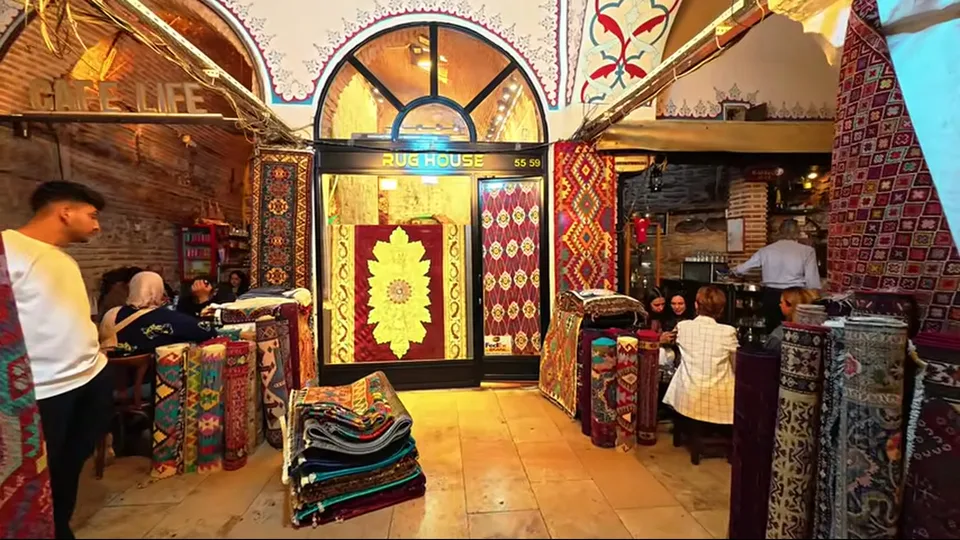
Centered rug shop scene with carpets and seating in the Grand Bazaar

Practical limits & what to bring

[ { "### What to Consider Before Visiting": "The Grand Bazaar is a massive historic district rather than a single building. For a smooth first visit, enter through the Beyazıt Gate via the T1 tram line (Beyazıt–Kapalıçarşı stop).

Navigating the bazaar involves constant movement through dense crowds and narrow, cobblestoned lanes, which can be physically taxing.

Expect a high-sensory environment with persistent vendors and prices that are often higher than in local neighborhoods like Kadıköy or Üsküdar.\n\nA confirmed booking slot is mandatory for entry.

Do not wait until you reach the gates to arrange your confirmation, as mobile signals can be spotty near the thick stone walls and queues form quickly. There is no central ticket office or reception desk; the gates themselves serve as the checkpoints.

If you are meeting others, specify a numbered gate (such as Gate 1 or Gate 7) in advance, as it is nearly impossible to find someone once inside the labyrinth.", "### Prohibited and Allowed Items": "- Professional photography equipment, including tripods and drones, is prohibited without a prior commercial permit.\n- Large suitcases and bulky hiking backpacks are not allowed inside due to the narrow passages and security risks.\n- Alcohol and open food containers should be avoided at the entrance.\n- Personal cameras and smartphones are allowed for casual photos.\n- Small backpacks and handbags are permitted but will be subject to security screening at the gates.\n- A bottle of water is recommended, as the interior can become quite warm.", "### Storage and Belongings": "There are no official luggage lockers or cloakrooms inside the Grand Bazaar.

Visitors arriving directly from the airport or train station should leave their bags at their hotel or use private luggage storage services near the Sultanahmet or Sirkeci transit hubs.

While strollers are technically permitted, they are highly impractical due to the uneven stone flooring, stairs in certain sections, and the sheer volume of pedestrian traffic. It is better to use a baby carrier.\n\nTip: Keep your wallet and phone in a front pocket or a secure cross-body bag.

The bazaar is very safe, but the density of the crowd makes it easy to lose track of personal items during a purchase." } ]

Glowing mosaic lamp stall in the Grand Bazaar beside a vaulted arcade

Location and what's nearby

[ { "### District Character": [ "- The district is the commercial heart of Old Istanbul, defined by labyrinthine streets and Ottoman-era stone architecture.", "- It is a high-density area where traditional trade meets global tourism, best suited for cultural exploration and souvenir hunting.", "- The atmosphere is energetic and loud, reflecting centuries of market culture rather than a quiet neighborhood stroll.", "- Visitors will find a mix of specialized craft workshops, gold dealers, and historic hans hidden behind heavy iron gates." ], "### Nearby on Foot (up to 15 minutes)": [ "- Nuruosmaniye Mosque — a stunning example of Ottoman Baroque architecture located at the main gate · 2 min", "- Beyazıt Square — a massive historic plaza hosting the monumental entrance to Istanbul University · 5 min", "- Sahaflar Book Market — an ancient courtyard filled with second-hand books, maps, and religious texts · 6 min", "- Çemberlitaş Column — a monumental Roman porphyry column erected by Emperor Constantine the Great · 8 min", "- Beyazıt Tower — a historic fire-watch tower offering a distinct silhouette over the university grounds · 10 min", "- Blue Mosque — the iconic six-minaret landmark of the city skyline and religious history · 14 min" ], "### 15–30 Minutes by Transport": [ "- Spice Bazaar — a vibrant market specializing in Turkish delights, dried fruits, and exotic seasonings · 10 min by tram", "- Süleymaniye Mosque — Mimar Sinan’s masterpiece offering the best panoramic views of the Golden Horn · 15 min by taxi", "- Galata Bridge — the lively link between the old city and the modern Karaköy district · 20 min by tram", "- Balat — a colorful historic neighborhood famous for its painted houses and bohemian cafes · 25 min by bus" ], "### Where to Eat Nearby": [ "- Nusr-Et Steakhouse Sandal Bedesteni — world-famous steaks served in a grand historic bazaar hall · high · booking recommended · 1 min walk", "- Havuzlu Restaurant — traditional Ottoman and Turkish cuisine inside a vaulted 19th-century space · mid-range · no booking needed · 2 min walk", "- Şehzade Cağ Kebap — legendary Erzurum-style lamb skewers in a simple, authentic setting · budget · no booking needed · 12 min walk", "- Pandeli — historic turquoise-tiled restaurant serving classic Turkish dishes to royalty and celebrities · above average · booking recommended · 15 min walk" ], "### Ready-made Day Route": "Start your morning at the Blue Mosque before walking toward the Grand Bazaar to explore its hidden courtyards and gold sections.

After a traditional lunch at Havuzlu Restaurant inside the market, head out through the Beyazıt Gate to browse the Sahaflar Book Market.

Finish the afternoon by taking the T1 tram to the Spice Bazaar for a sensory finale of colors and scents.\n\nNote: To avoid the heaviest crowds and navigate more easily, enter through the Nuruosmaniye Gate and exit toward Beyazıt Square." } ]

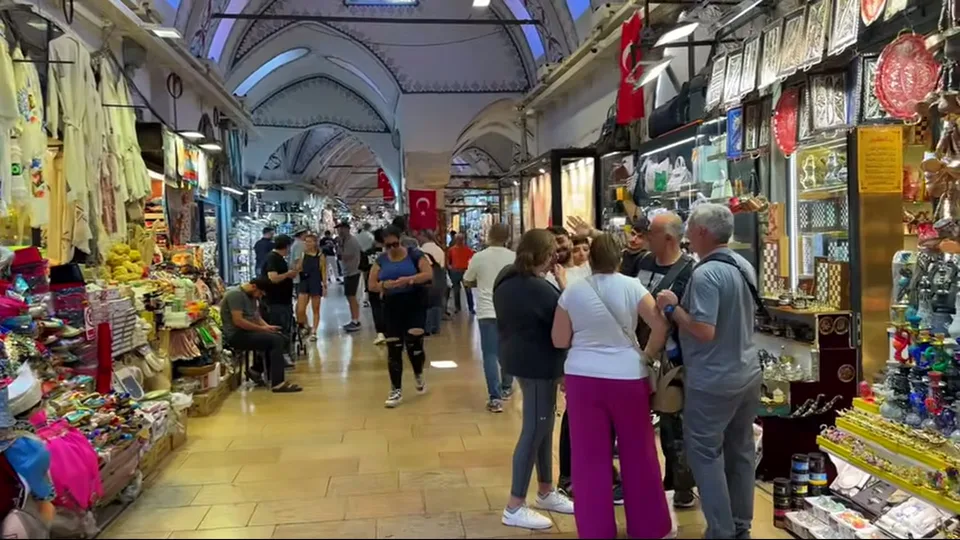
Shoppers pause beside bag and souvenir stalls in the Grand Bazaar
Reference

Facts

Read more

[ { "### Numbers and Scale": [ "- Opening: 1455, establishing it as one of the oldest continuously operating covered shopping complexes in the world.", "- Total Area: 30,700 square meters, encompassing a massive labyrinthine district in the heart of the Fatih district.", "- Shop Count: Over 4,000 individual shops and stalls, traditionally organized by guilds such as jewelers, carpet weavers, and leather workers.", "- Network: 61 covered streets and 22 distinct gates, including the prominent Nuruosmaniye and Beyazit entrances.", "- Daily Footfall: Between 250,000 and 400,000 visitors, making it one of the most visited landmarks on the planet.", "- Workforce: Approximately 25,000 people are employed within the bazaar, supporting a micro-economy that dictates local gold and currency rates." ], "### Myths and Misconceptions": [ "- Myth: Haggling is an aggressive requirement for every single transaction made inside the bazaar.

Reality: High-end jewelry boutiques and established carpet showrooms often operate with fixed prices or very narrow negotiation margins.", "- Myth: The Grand Bazaar is a purely tourist-oriented attraction with no relevance to modern local life.

Reality: It remains the primary hub for Turkey's physical gold trade and is used daily by local jewelers and investors.", "- Myth: You can easily navigate the entire complex using standard smartphone GPS and digital maps.

Reality: The thick stone walls and lead-covered domes frequently block satellite signals, making physical landmarks more reliable for navigation.", "- Myth: Every item sold as a 'traditional antique' can be legally taken out of the country.

Reality: Turkish law strictly prohibits the export of genuine antiquities; most items sold to travelers are high-quality modern reproductions." ], "### Rare and Unusual": [ "- The roof of the bazaar served as the iconic setting for a high-speed motorcycle chase in the film Skyfall.", "- The Inner Bedesten (Ic Bedesten) functions as a high-security zone where the most valuable historical artifacts and gemstones are traded.", "- Zincirli Han is a hidden, picturesque caravanserai within the bazaar featuring a red facade and a massive, ancient plane tree in its courtyard.", "- The bazaar houses its own dedicated police station, health clinic, and post office to serve its massive daily population.", "- A small, traditional mosque called the 'Kusluk' is tucked away inside, providing a quiet sanctuary for merchants amidst the chaotic trade.", "- The Nuruosmaniye Gate features a carved Ottoman coat of arms and an inscription dating back to a major restoration after the 1894 earthquake." ] } ]

Background

History

Read more

[ { "history": "The Grand Bazaar was established in the mid-1400s shortly after the Ottoman conquest to serve as the economic engine of the new capital. Sultan Mehmed II commissioned the initial stone structures to centralize the trade of luxury goods and generate revenue for the Hagia Sophia.

What began as two small domed warehouses eventually grew into a massive complex of over 60 streets and thousands of shops.\n\n### A Fortress of Trade\nOver the centuries, the bazaar evolved into a city within a city, protected by thick walls and monumental gates.

It survived numerous fires and earthquakes, with each rebuilding phase adding the iconic vaulted ceilings and labyrinthine layout seen today.

For generations, it functioned not just as a market, but as a financial center and a vital link in the global Silk Road trade.\n\nToday, the bazaar remains the heart of Istanbul’s traditional commerce.

While it is a primary destination for jewelry, carpets, and ceramics, it maintains the centuries-old atmosphere of a bustling trade hub. Navigating its narrow alleys offers a direct connection to the craftsmanship and social traditions that have shaped the city for over five centuries." } ]

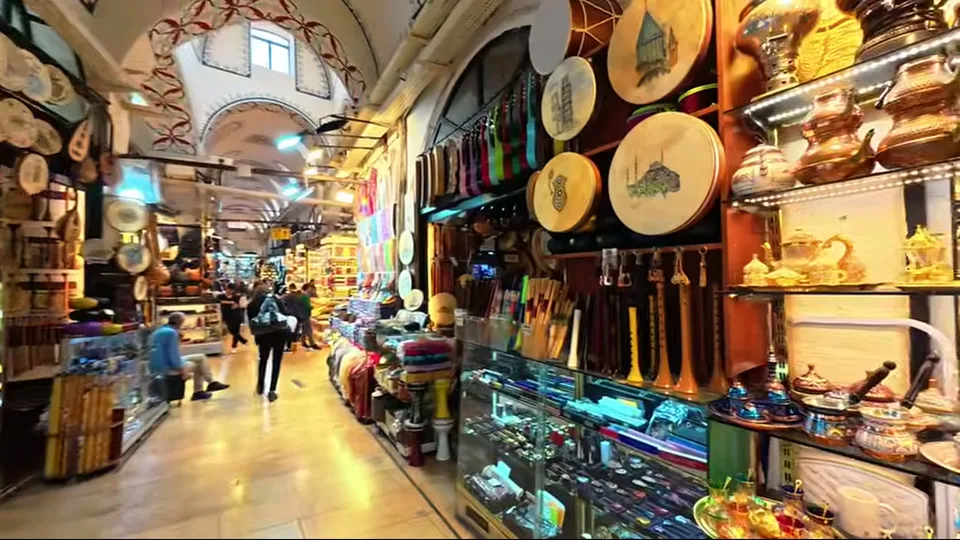
Wider Grand Bazaar corridor with Turkish flags, souvenirs, and antique-style stalls

♿ Accessibility & families

[ { "short_accessibility_flag": "Partially accessible; level main gates but uneven historic flooring.", "child_friendly": "Yes, but requires constant supervision due to crowds and layout.", "accessibility_and_family_policy": "## Accessibility and Mobility\nThe Grand Bazaar is largely accessible to wheelchair users and strollers via its primary entrances.

Gates such as Nuruosmaniye (Gate 1) and Beyazıt (Gate 7) offer level access to the main vaulted corridors. While the central thoroughfares are flat, the historic stone flooring is often uneven and can be slippery.

Visitors with reduced mobility should be aware that the smaller side streets and traditional 'hans' (inner courtyards) frequently feature high stone thresholds or narrow, steep staircases that are not wheelchair-compatible.\n\n## Families and Children\nEntry to the bazaar is free for all visitors, regardless of age.

There are no formal age restrictions, but children should be closely supervised at all times due to the sheer scale and complexity of the market; it is a labyrinth of 61 streets where it is easy to become separated.

The environment is high-sensory, with significant noise and dense crowds, which can be overwhelming for younger children.\n\n## Practical Constraints\nStrollers are allowed throughout the complex, though navigating them is challenging during peak hours from midday to late afternoon.

For a more manageable experience, families should arrive near the 10:00 AM opening time. Public restrooms are located near the main gates; these typically require a small cash payment of approximately 10 to 20 TRY and may have limited space for strollers or modern diaper-changing facilities." } ]

🏢 On-site amenities

[ { "amenities": "## On-Site Facilities\n\nRestrooms and Prayer Rooms\nPaid public toilets (WC) are located throughout the bazaar, typically situated near the mosque areas or within the larger 'han' (courtyards). Access requires a small fee in TRY, usually payable by coins or Istanbulkart.

Several small prayer rooms (mescit) are also available within the complex for public use.\n\nDining and Refreshments\nThe bazaar offers a wide range of dining, from traditional tea houses to high-end restaurants. Şark Kahvesi is a landmark spot for authentic Turkish coffee in a casual setting.

For a premium experience, Nusr-Et Steakhouse is located in the Sandal Bedesteni section.

Small stalls selling bottled water, simit, and fresh juices are found in almost every corridor.\n\nShopping and Connectivity\nAs one of the world's largest covered markets, the site itself is a massive collection of shops specializing in gold jewelry, leather goods, hand-woven carpets, and Turkish ceramics.

While there is no bazaar-wide free Wi-Fi, most established cafes and restaurants provide internet access to their customers.\n\nVisitor Requirements\nEntry is managed via a booking slot system. Ensure your reservation is confirmed before arriving at the gates to avoid delays.

Because the bazaar has multiple entrances, such as the popular Beyazıt gate, it is best to decide on a specific meeting point in advance, as the dense crowds and layout make it easy to lose your way." } ]

Reliability & freshness

UpdatedMay 29, 2026

I live in Istanbul and, after seven years here, I write clear guides on getting around Türkiye day to day.