Karaköy and Galata
Karaköy and Galata form a lively base between the waterfront and Istanbul’s historic hills. The area suits independent travellers, couples, and anyone who wants cafés, ferries, evening walks, and everyday city life alongside easy access to major sights. Its main trick is flexibility: start the day with museums and squares, shift to the promenade or ferry piers by afternoon, then stay for the evening atmosphere. The trade-off is that hills, stairs, and changing street rhythms are part of the experience.
Attractions in this area
2 places we cover here.
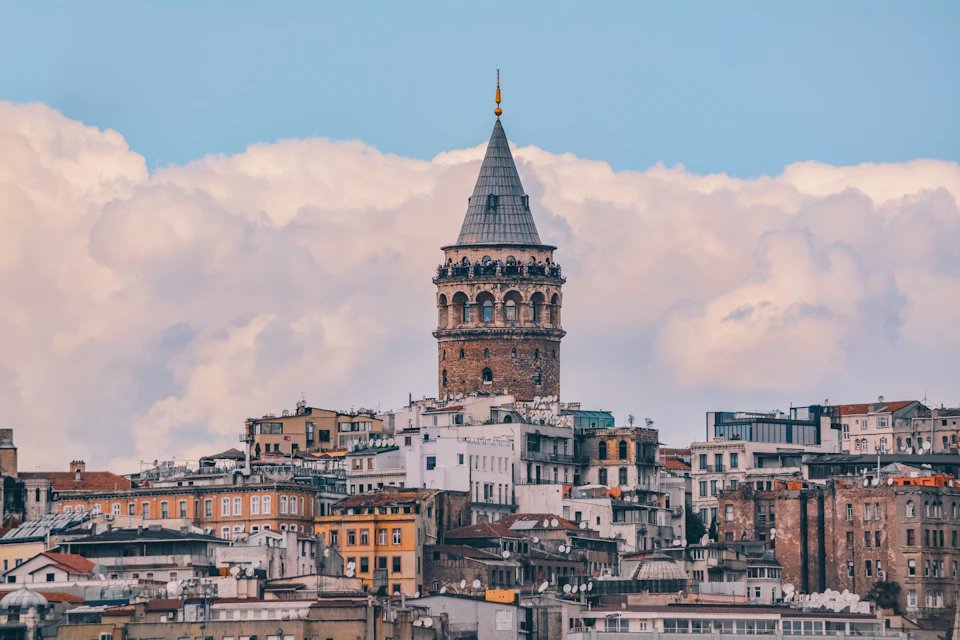
Galata Tower is a compact viewpoint rather than a full museum stop: you go up for a high, urban panorama of the Bosphorus, the old city hills, Karaköy, and the ...
A Bosphorus cruise is one of the easiest ways to understand Istanbul’s scale: in 1–2.5 hours you see the city from the water, switch off from museum pacing, and...
Karaköy and Galata feel like a compact urban route between the water and the hills. Down by the waterfront, ferries, trams, cafés, and passing crowds keep the area in motion. Higher up, stairs and narrow streets lead towards Galata Tower and Şişhane, with the city opening into different directions at every turn.
The architecture is layered rather than uniform. Historic stone buildings stand alongside old commercial façades, former workshops, and newer cafés or creative spaces. The transitions are part of the character: a busy working street can give way to a quiet side lane within a few minutes.
The pace shifts throughout the day. Mornings begin with commuters, deliveries, and transport; afternoons bring waterfront walks and café stops; evenings turn the streets into a lively setting for dinner and slow wandering. It feels active without being reduced to a sightseeing zone.
The main vibe is urban and flexible: part working neighbourhood, part historic centre, part evening base. Karaköy and Galata suit travellers who want the city around them, with the water, everyday movement, and occasional uphill effort all built into the route.
Atmosphere
Karaköy and Galata have a layered, slightly uneven character. Along the lower streets, historic stone buildings, old commercial façades and former workshops stand beside renovated cafés, galleries and contemporary spaces.
The route rises quickly through stairways and narrow lanes towards Galata Tower and Şişhane, with sudden changes from busy streets to quieter corners. Views open and close between buildings, while the waterfront keeps the district connected to ferries, trams and the constant movement of the city.
By evening, cafés fill with locals, visitors, freelancers and couples, while independent travellers move between the waterfront, Galata and the surrounding streets. You hear ferry horns, tram bells, footsteps on the slopes and conversations spilling onto the pavement.
The atmosphere stays social rather than resort-like: lively around the main routes, more relaxed in side streets, and best suited to people comfortable with crowds, urban noise and walking uphill.
How to get there
Istanbul Airport | M11 to Gayrettepe, change to M2 for Şişhane, then walk downhill to Galata or Karaköy; around 60–75 minutes and about ₺100–150 with Istanbulkart. Sabiha Gökçen Airport | M4 to Kadıköy, then take the ferry to Karaköy; around 90–120 minutes and about ₺110–150 in total.
Sultanahmet | Take the T1 tram towards Kabataş and get off at Karaköy; around 15–20 minutes and about ₺46 per city ride with Istanbulkart. Taksim | Take the M2 to Şişhane and walk downhill, or walk directly through the Galata streets; around 10–20 minutes and about ₺46 by metro.
Any central point | A yellow taxi is practical with luggage; allow 30–90 minutes depending on traffic, with a 2026 starting fare of ₺65.40 plus ₺43.56 per kilometre.
Getting around
Karaköy and Galata are easiest to explore on foot, but expect steep streets, stairs and uneven pavements as you move uphill toward Galata Tower and Şişhane. Walking works well for short distances and lets you connect the waterfront, cafés and side streets, though a route that looks close on the map may take longer than expected.
The tram and ferry piers are useful for leaving the area, while Şişhane Metro is more practical for the upper part of Galata. Taxis are convenient on the main roads, especially with luggage, but cars may not reach narrow streets or find an easy stopping point. Taxi apps can simplify ordering, yet walking to a larger street may still be necessary for pickup.
Best time to visit
The most comfortable time to explore Karaköy and Galata is in spring, early summer or autumn, when walking the hills and stairs is easier. Start in the morning for quieter streets, easier café stops and a smoother route to nearby sights. Return in the evening for the waterfront, ferries and livelier streets.
In July and August, avoid the hottest hours around midday, while weekends bring more movement around the waterfront and popular walking routes.
Top attractions in this area
Galata Tower | Historic landmark with wide views across Istanbul and the Golden Horn, best reached by walking uphill through Galata’s streets. Galata Bridge | A lively crossing over the Golden Horn, known for ferry traffic, waterfront views and everyday city movement.
Istanbul Modern | Contemporary art museum in Karaköy, a useful stop when you want to add culture to a waterfront walk. Kamondo Stairs | Elegant historic staircase connecting the lower streets with the Galata area and offering a quick architectural detour.
Kılıç Ali Paşa Mosque | Ottoman-era mosque complex near the waterfront, worth visiting for its calm courtyard and historic setting.
Where to stay
Accommodation in Karaköy and Galata ranges from practical mid-range hotels to boutique and upper-mid properties in restored historic buildings or modern city spaces.
Larger hotel chains may suit travellers who prioritise consistent service and easier logistics, while boutique hotels are a better match for those who want more character and a stronger connection to the neighbourhood.
For the budget segment, focus on the exact location rather than choosing by the lowest rate: a property close to the waterfront or a main transport connection can be much easier than one higher up the hill.
In the premium segment, look for views, sound insulation, lifts and a comfortable approach from the street, especially if you are travelling with luggage. In Galata, proximity to the main streets does not always mean a simple route, so check the walking access before booking.
Dining
Karaköy and Galata have a broad, walk-in-friendly dining scene built around cafés, bakeries, Turkish breakfast spots, street snacks and casual restaurants.
Near the waterfront, ferry connections and busy streets, you will find quick meals, coffee, pastries and simple seafood or grill dishes; uphill, the atmosphere shifts toward all-day cafés, meze, modern Turkish cooking and international casual dining.
Food courts and informal counters suit a quick, lower-cost stop, while cafés and casual restaurants usually work from breakfast or late morning through dinner, with many places staying active into the evening.
The average check ranges widely. Coffee, bakery items and street food are the easiest budget options; a casual meal with drinks sits in the mid-range, while well-designed restaurants and chef-led venues cost noticeably more.
Fine dining is present but is not the defining feature of the area: Karaköy and Galata are better known for variety, atmosphere and flexible formats than for one concentrated restaurant strip. Expect busier evenings and a more relaxed pace during the late morning and afternoon.
Shopping
Shopping in Karaköy and Galata is more about independent shops than large shopping centres. Around Galata Tower, Serdar-ı Ekrem and the nearby side streets, you will find design stores, small boutiques, vintage pieces, homeware and locally made goods.
Galip Dede Street is known for musical instrument shops, while the lower streets of Karaköy have a more practical mix of hardware, workshop and trade stores.
On the waterfront, Galataport Istanbul adds a newer shopping and dining area with international brands, local labels and spaces for an easy browse between walks. For souvenirs, look beyond the most obvious tourist shops: stationery, ceramics, textiles, accessories and small design objects are often a better fit for the neighbourhood’s urban character.
Practical tips
Clothing | Wear comfortable shoes with good grip: the route between Karaköy and Galata includes hills, stairs and uneven streets.
Money | Keep a card and some Turkish lira available; small cafés, kiosks and transport top-ups may not always be equally convenient with one payment method.
Queues | Start early for popular sights and allow extra time around transport hubs, especially during busy daytime hours.
Navigation | Check the route by elevation, not just distance: a short walk uphill can be much slower with luggage or after a full day.
Common mistake | Do not plan Karaköy, Galata and the waterfront as one flat, effortless stroll; split the area into shorter sections and build in breaks.
Safety
Karaköy and Galata are generally safe for visitors during the day and in the evening, especially on the busier streets, around cafés, transport links and the waterfront.
The main risks are ordinary big-city problems: pickpocketing, phone or bag theft in crowded places, and overcharging or unwanted attention from people inviting you to a restaurant, bar or club. Keep valuables secure, check the route before taking quieter stairways, and buy drinks directly from the venue.
At night, the area remains active, but some side streets and uphill passages become much quieter than the main routes. Use normal city precautions, avoid walking alone through empty shortcuts, and stay clear of demonstrations or large political gatherings, which can disrupt transport and become tense.
Karaköy and Galata are not areas to avoid, but they reward basic awareness rather than complete carelessness.
Photo spots
Karaköy waterfront and ferry piers | Early morning or blue hour | Ferries, the Golden Horn, Galata Bridge and the changing light over the water
Galata Bridge | Late afternoon | Fishing lines, ferries, the waterfront skyline and silhouettes of historic Istanbul
Kamondo Stairs | Morning or late afternoon | The curved staircase, stone façades and people moving between Karaköy and Galata
Galata Tower area | Early morning or after sunset | Narrow streets, historic buildings and the tower rising above the surrounding rooftops
Nearby neighborhoods
From Karaköy, it is easy to continue toward Tophane and Cihangir, with galleries, small streets and cafés along the way. Across the water, Eminönü leads into the Spice Bazaar and the historic peninsula, while Sultanahmet is convenient for a longer visit to the main monuments. Uphill, Galata connects naturally with Beyoğlu and Şişhane.
Area pros
Easy access to the waterfront, ferries and tram connections
A strong base for combining Galata, the historic centre and everyday Istanbul
Cafés, evening walks and local street life close to your accommodation
Good fit for independent travellers who want flexible, walkable days
A varied neighbourhood with history, views, shopping streets and changing city rhythms
Area cons
Hills, stairs and uneven streets can be tiring, especially with luggage. Evening noise and foot traffic may not suit light sleepers. Short walks are not always easy walks because of steep routes and confusing turns. Less practical for trips focused almost entirely on Sultanahmet.
Better-located boutique hotels can be noticeably above the area’s average price.